

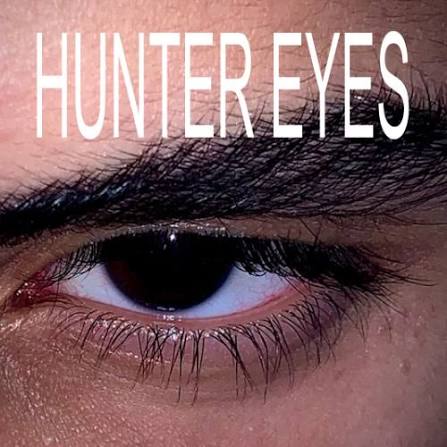
“Hunter eyes” is a term from social media and the “looksmaxxing” community, not a medical diagnosis or a single standardized procedure. It describes an intense, deep-set gaze often associated with a masculine, focused look. In aesthetic practice, “hunter eyes treatment” means a combination of techniques that reshape the periorbital region (brow, upper eyelid, lateral canthus and lower lid) to approximate this appearance.
What Are Hunter Eyes?
 Hunter eyes are defined by a set of features:
- A low, straight brow sitting close to the upper eyelid, with a prominent supraorbital ridge
- Minimal upper eyelid show, giving a slightly hooded, “shadowed” look
- A positive canthal tilt, with the outer corner of the eye slightly higher than the inner corner
- Little visible sclera (white of the eye) below the iris, thanks to a firm lower lid
- A deep-set appearance, created by projection of the brow bone and cheekbone
These features depend largely on skeletal structure, so results vary from person to person.
Techniques Used
No single operation creates hunter eyes. The practitioner combines several options depending on the patient’s anatomy.
1. Brow bone (supraorbital) augmentation
- Implants: custom or pre-formed implants (silicone, PEEK or porous polyethylene) placed over the brow ridge
- Fat grafting: autologous fat injected to add projection, with partial resorption expected
- Hyaluronic acid or biostimulatory fillers: a temporary, reversible option (hyaluronic acid can be dissolved with hyaluronidase)
2. Brow position adjustment
- Botulinum toxin in the brow depressors (procerus, corrugator, orbicularis oculi) can lower or flatten the brow. Treating the frontalis muscle is generally avoided, as it would lower the brow too much.
- Surgical brow repositioning is rarely used and must be done cautiously.
3. Lateral canthopexy or canthoplasty
This surgery tightens and repositions the outer corner of the lower lid to increase the canthal tilt and reduce scleral show. It is the most technically demanding component and the most likely to affect eye function if done poorly.
4. Lower lid and periorbital contouring
Lower lid tightening and careful filler or fat placement in the lateral orbit or temple can support the shape of the eye and reduce the “hollow” look.
5. Skin and eyelid management
A conservative upper blepharoplasty may be considered when excess skin genuinely obstructs the eye. It is not used to create the hooded look, since it removes tissue rather than adding it.
Procedure and Course of Treatment
- Consultation: facial and orbital analysis, photographs, medical and ophthalmologic history, assessment of eyelid position, brow height, tear film and lid laxity. A responsible practitioner also checks the patient’s motivations and expectations.
- Planning: the practitioner chooses between non-surgical options (toxin, fillers), minor surgery (fat grafting) and surgical options (implants, canthopexy). Non-surgical options are often tried first because they are reversible.
- Anesthesia: local anesthesia for injections and fat grafting; local with sedation or general anesthesia for implants and canthal surgery.
- Duration: injections take 20 to 45 minutes. Surgical procedures generally last one to three hours depending on the combination.
- Approach: implants are usually placed through hidden incisions (in the brow or upper lid crease), and canthopexy through the lateral lid.
Follow-Up and Recovery
- Injectables: minimal downtime, with possible bruising and swelling for several days. Toxin takes effect in about 7 to 14 days.
- Surgery: swelling and bruising commonly last one to three weeks, with gradual settling over several months. Patients are usually advised to avoid strenuous exercise, sleep with the head elevated and use cold compresses and lubricating drops.
- Follow-up visits: typically at one week, one month and three to six months, to check symmetry, lid position, eye comfort and any implant or graft issues.
Results
- Injectables produce visible but temporary changes: toxin typically lasts three to four months and fillers vary by product.
- Implants and canthal surgery provide longer-lasting, more structural changes, but final results may take three to six months to appear.
- Fat grafting results are semi-permanent, since part of the fat is reabsorbed.
Satisfaction depends heavily on anatomy and expectations. Patients with naturally deep-set eyes and a strong brow ridge typically get the most convincing outcome. Social media images are often filtered, angled or lit to exaggerate the effect, so results may look subtler in real life.
Indications
The treatment may be considered for adults who:
- have a flat or weak brow ridge, or an eye area that looks “open” or rounded and want a more angular look
- have a negative canthal tilt or lower lid laxity affecting eye shape
- have realistic expectations and stable, informed motivations
Contraindications and Cautions
- Active eye disease, severe dry eye, or unstable eyelid or thyroid-related eye conditions
- Uncontrolled systemic disease, bleeding disorders or active infection
- Unrealistic expectations or signs of body dysmorphic disorder, in which case psychological assessment is advisable before any procedure
- Pregnancy or breastfeeding for injectable treatments
- Being under 18, or having a face that is still developing
Specifications and Risks
The main risks vary with the technique:
- Fillers: bruising, asymmetry, lumps, and, rarely but seriously, vascular occlusion that can cause skin necrosis or vision loss
- Toxin: brow or eyelid ptosis, heaviness and a tired or angry expression
- Implants: infection, displacement, visible edges, asymmetry, nerve numbness (supraorbital nerve) and the need for removal
- Canthopexy or canthoplasty: lid malposition, dry eye, irritation, asymmetry and revision surgery
- General: dissatisfaction with the result, since some changes are difficult or impossible to reverse
Intentionally lowering the eyelid or brow too much can reduce the visual field and worsen eye comfort. The procedure should be performed by a board-certified plastic, oculoplastic or facial plastic surgeon (or a properly trained physician for injectables), in an appropriate medical setting.
Conclusion
Hunter eyes is a popular aesthetic goal, but it is a style rather than a standardized treatment. Results depend on a careful, individualized plan combining several small adjustments, with a preference for reversible options first. Because the eye area is delicate and functionally important, choosing an experienced practitioner and setting realistic expectations matter more than chasing a specific online look.
This article is for general information only and does not replace a medical consultation.