

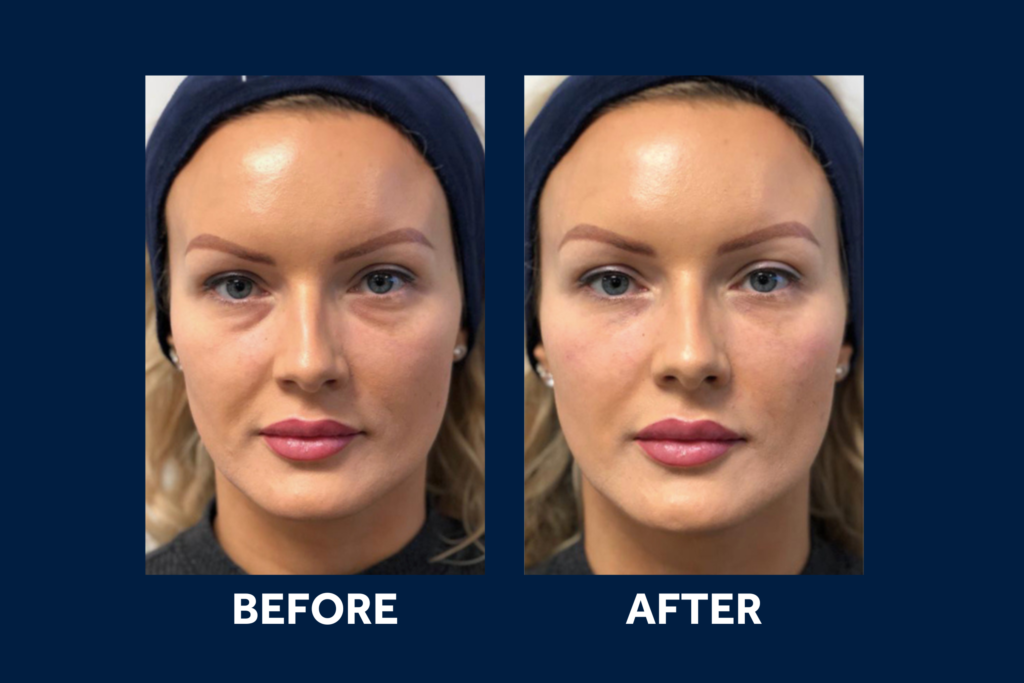
The tear trough is the hollow area located between the lower eyelid and the upper cheek. As we age, changes in skin quality, fat distribution, bone structure, and soft-tissue volume can make this area appear more pronounced. The result may be a tired, sunken, or aged appearance, even when a person is well-rested.
Tear trough filler treatment is a non-surgical aesthetic procedure designed to restore volume in this area and create a smoother transition between the lower eyelid and cheek. Soft tissue fillers, particularly hyaluronic acid-based fillers, are among the options used to address selected cases.
However, the tear trough is a delicate anatomical area, and filler injections require a thorough understanding of facial anatomy and appropriate patient selection. The procedure is not suitable for everyone, particularly when under-eye bags, significant skin laxity, or excess fat are the main concerns.
What Is a Tear Trough?
The tear trough is a depression that extends from the inner corner of the eye toward the upper cheek. Its appearance can be influenced by several factors, including genetics, facial anatomy, aging, volume loss, skin thinning, and changes in the tissues surrounding the eye.
A pronounced tear trough can create a visible shadow beneath the eyes. This shadow may contribute to the impression of dark circles or facial fatigue, although pigmentation and vascular factors can also play a role.
It is therefore important to distinguish between hollowness caused by volume deficiency and dark circles caused primarily by pigmentation or vascular changes.
What Are Tear Trough Fillers?
Tear trough fillers are soft tissue fillers injected into carefully selected areas around the lower eyelid and upper cheek to improve the appearance of hollowness.
The most commonly used filler in this context is hyaluronic acid (HA). Hyaluronic acid is a naturally occurring substance in the body that has the ability to bind water and provide volume.
Depending on the patient’s anatomy and treatment plan, the filler may be placed directly in or around the tear trough or at the lid-cheek junction to create a smoother transition.
The objective is not necessarily to fill the hollow as much as possible. Instead, the goal is usually to achieve a subtle correction while preserving the natural appearance of the eyes.
Types of Soft Tissue Fillers for the Tear Trough
Different types of dermal and soft tissue fillers exist, but they are not equally appropriate for the under-eye area.
Hyaluronic Acid Fillers
Hyaluronic acid fillers are commonly considered for tear trough correction because they can provide volume and are available in formulations with different physical properties.
One important advantage of HA fillers is that, when clinically appropriate, their effects can be reversed using hyaluronidase, an enzyme that breaks down hyaluronic acid.
However, this does not eliminate the risks associated with treatment, and reversal should not be considered a guarantee against complications.
Calcium Hydroxylapatite Fillers
Calcium hydroxylapatite (CaHA) is another type of injectable soft tissue filler. It provides volume and can stimulate collagen production.
However, CaHA is generally not the first-line filler for the tear trough itself, because the under-eye region requires particularly precise product selection and placement.
Poly-L-Lactic Acid Fillers
Poly-L-lactic acid is a biostimulatory injectable designed to stimulate collagen production progressively rather than simply providing immediate volume.
Because the tear trough is a delicate area, its use around the eyes requires careful patient selection and appropriate expertise. It is not typically used in the same way as a conventional hyaluronic acid tear trough filler.
Autologous Fat
Although technically different from injectable soft tissue fillers, fat transfer may also be used to restore volume around the eyes in selected patients.
Small amounts of the patient’s own fat are harvested from another area of the body and transferred to areas requiring volume restoration.
Fat grafting is more invasive than HA filler treatment and has different advantages, limitations, and risks.
What Are the Benefits of Tear Trough Fillers?
For appropriately selected patients, tear trough filler treatment may provide several aesthetic benefits.
These may include:
- reducing the appearance of under-eye hollowness;
- creating a smoother transition between the lower eyelid and cheek;
- reducing shadows caused by volume deficiency;
- creating a more refreshed appearance;
- restoring subtle volume lost with age;
- improving facial harmony without surgery.
One of the main advantages is that the treatment can be performed without an extensive surgical procedure.
Nevertheless, the goal should be correction rather than overfilling. Excessive filler can make the under-eye area appear swollen or unnatural.
What Results Can You Expect?
Results can often be noticed relatively quickly after treatment, although the final appearance may take time to settle as swelling decreases.
A successful correction should generally look subtle. The aim is to reduce the visible transition between the lower eyelid and cheek rather than create an obviously filled appearance.
The duration of results varies according to the filler used, the patient’s metabolism, the amount injected, the treatment technique, and individual anatomy.
Hyaluronic acid fillers are temporary and gradually break down over time. Some patients may require maintenance treatment to preserve the effect.
Tear Trough Filler Before and After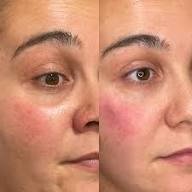
Before-and-after results can vary considerably from one patient to another.
The quality of the result depends not only on the filler itself but also on:
- the patient’s anatomy;
- the degree of volume loss;
- skin quality;
- the presence of under-eye bags;
- facial proportions;
- the type and amount of filler used;
- the injection technique.
Before-and-after photographs should therefore be interpreted carefully. A result that is appropriate for one patient may not be suitable for another.
How Is Tear Trough Filler Treatment Performed?
A treatment generally begins with a detailed assessment of the lower eyelids, cheeks, skin quality, facial anatomy, and the patient’s aesthetic concerns.
The practitioner determines whether the problem is primarily related to volume loss or whether other factors, such as excess fat or skin laxity, are contributing to the appearance.
The skin is then prepared, and the filler is injected using an appropriate technique. Depending on the practitioner’s approach and the patient’s anatomy, a needle or cannula may be used.
The amount of filler should generally be conservative. The under-eye area does not require large volumes to produce a visible change.
Is Tear Trough Filler Painful?
Most patients experience some degree of pressure, pinching, or mild discomfort during injection. Many hyaluronic acid fillers contain lidocaine to improve treatment comfort.
Temporary tenderness, swelling, redness, or bruising may occur after the procedure.
These effects usually improve progressively, but the recovery period varies from person to person.
What Are the Risks of Tear Trough Fillers?
Although tear trough filler is minimally invasive, it is not risk-free.
Common temporary effects may include:
- swelling;
- bruising;
- redness;
- tenderness;
- mild discomfort;
- temporary asymmetry.
Less common complications can include persistent lumps, irregularities, discoloration, or a bluish appearance known as the Tyndall effect, particularly when hyaluronic acid is placed too superficially.
More serious complications are rare but can occur with injectable fillers. Because blood vessels around the eyes are connected to important vascular structures, accidental injection into a blood vessel can potentially cause vascular occlusion and, in extremely rare cases, serious visual complications.
This is why tear trough injections should only be performed by an appropriately qualified and experienced medical professional with detailed knowledge of periorbital anatomy.
Who Is a Good Candidate for Tear Trough Fillers?
Tear trough fillers may be appropriate for adults with relatively mild to moderate under-eye hollowness caused primarily by volume deficiency and who have realistic expectations.
However, filler may not be the best solution for patients with:
- significant under-eye bags;
- pronounced skin laxity;
- substantial excess fat in the lower eyelids;
- severe pigmentation;
- prominent swelling or fluid retention around the eyes;
- certain medical or anatomical conditions affecting the treatment area.
In some cases, a surgical procedure such as lower blepharoplasty may provide a more appropriate solution.
Tear Trough Filler vs. Lower Blepharoplasty
Tear trough filler and lower blepharoplasty address different concerns.
- Tear trough filler is a non-surgical approach that primarily aims to restore volume and soften the transition between the lower eyelid and cheek.
- Lower blepharoplasty, on the other hand, is a surgical procedure that can address excess skin, protruding fat, and certain structural changes around the lower eyelids.
The appropriate treatment depends on the underlying cause of the patient’s concern. A person with hollowing may benefit from volume restoration, while someone with significant bags or excess skin may require a surgical approach.
How Long Do Tear Trough Fillers Last?
There is no single duration that applies to every patient.
The longevity of a filler depends on factors such as:
- the type of filler;
- the amount injected;
- individual metabolism;
- facial movements;
- injection technique;
- the patient’s anatomy.
Hyaluronic acid fillers gradually become metabolized by the body. When the aesthetic effect diminishes, a medical assessment can determine whether additional treatment is appropriate.
How Much Does Tear Trough Filler Cost?
The cost of tear trough filler varies considerably depending on the country, clinic, practitioner’s experience, type of filler, and amount of product required.
Because the procedure involves a delicate anatomical area, price should not be the only criterion when choosing a practitioner. Experience with periorbital injections, appropriate medical qualifications, product quality, and the ability to manage complications are particularly important.
Why Is Patient Selection So Important?
Not every under-eye concern is caused by a lack of volume.
For example, a patient may have dark circles because of pigmentation, visible blood vessels, anatomical shadowing, skin thinning, or a combination of several factors. Adding filler to a problem that is not primarily related to volume loss may produce limited or unsatisfactory results.
A proper consultation should therefore identify the underlying cause before treatment is recommended.
Can Tear Trough Fillers Be Dissolved?
One of the advantages of hyaluronic acid fillers is that they can generally be treated with hyaluronidase if dissolution is medically indicated.
This can be useful in cases of overcorrection, certain nodules, or some filler-related complications.
However, hyaluronidase should only be used by a qualified medical professional. It is also important to understand that dissolving filler is a medical intervention and does not guarantee that every complication will immediately disappear.
How to Choose a Practitioner for Tear Trough Filler
The under-eye area requires a particularly high level of precision.
When considering treatment, patients should look for a qualified medical practitioner with specific experience in:
- facial anatomy;
- periorbital injections;
- hyaluronic acid fillers;
- management of filler complications;
- conservative and natural-looking aesthetic correction.
A thorough consultation should take place before treatment, with realistic expectations and a clear discussion of potential benefits and risks.
Final Thoughts
Tear trough fillers can provide a subtle and effective non-surgical option for appropriately selected patients who have under-eye hollowness caused primarily by volume loss.
Hyaluronic acid remains one of the most commonly considered soft tissue fillers for this area because it can restore volume and, when clinically appropriate, can be dissolved with hyaluronidase.
However, the tear trough is one of the most technically demanding areas of the face for injectable treatments. The procedure should therefore never be treated as a simple beauty treatment.
A personalized medical assessment is essential to determine whether filler is appropriate or whether another approach, such as skincare, laser treatment, fat transfer, or lower blepharoplasty, would better address the underlying concern.
The best results are usually those that remain discreet: the objective is not to make the under-eye area look filled, but to create a smoother, fresher, and more harmonious transition between the eyes and cheeks.